


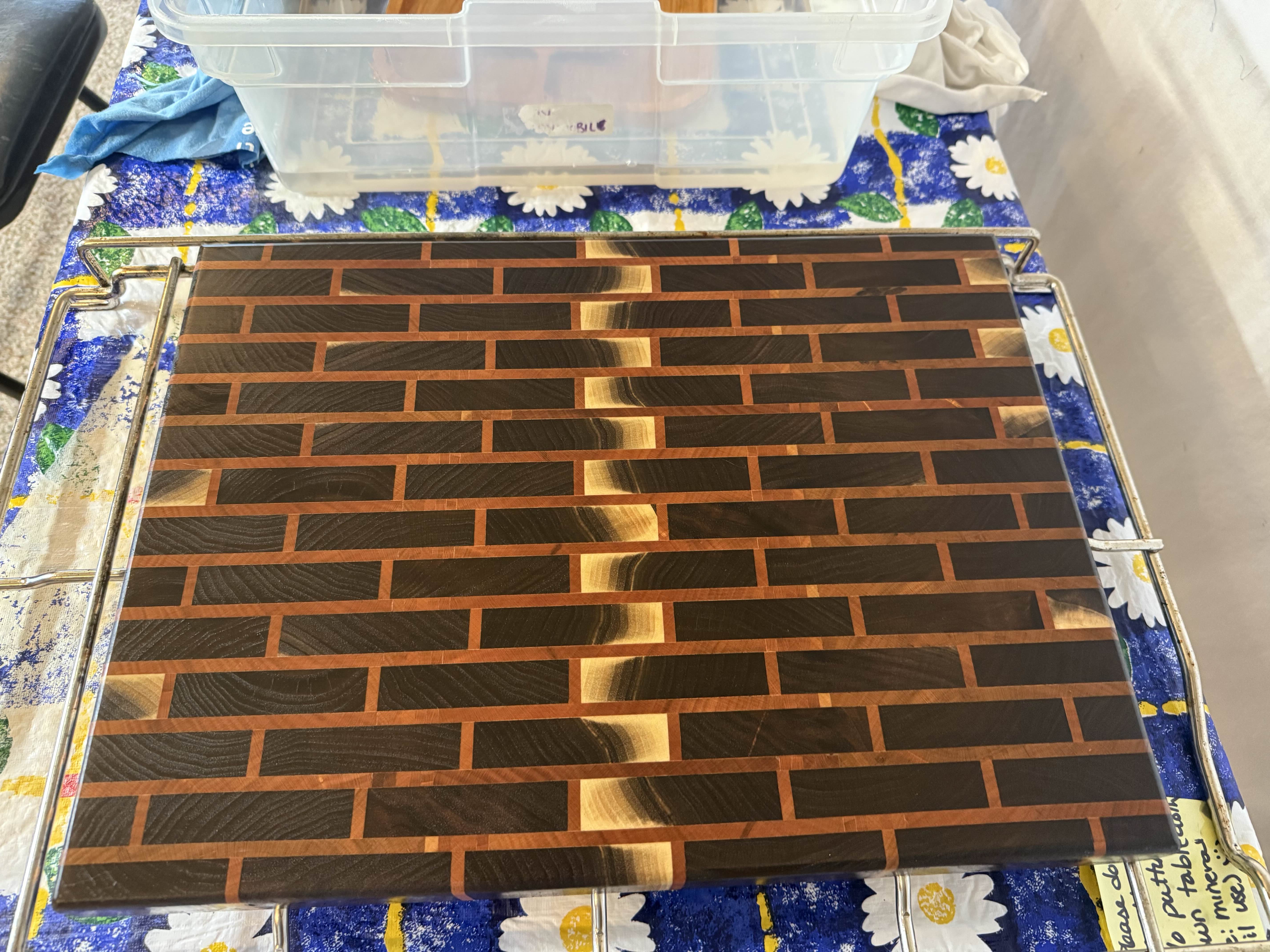

End grain cutting boards have become almost iconic in woodworking circles. Their checkerboard look is beautiful, and they have a reputation for being “better for your knives.” But are they all they’re cracked up to be? Let’s explore the myths, the maintenance headaches, and why a long grain board might just be the smarter choice—especially in a shared shop like The Joinery.
A Quick History
The end grain cutting board traces back to butcher blocks used in meat shops, where durability was key. These blocks were often made significantly thicker to allow for multiple surface renovations over their lifetime, which helped extend their usefulness. The idea was simple: turn the wood so the fibers stand upright, allowing knives to slice between the grain instead of across it. This design supposedly made the board “self-healing” and longer-lasting.
Mythbusting: What End Grain Boards Don’t Tell You
They Don’t Really Heal
Yes, the cuts are less visible. No, the board doesn’t actually heal. End grain boards still wear out, especially under heavy use. They just age differently than long grain boards.
They’re Not Necessarily More Sanitary
A recent study out of the University of Wisconsin-Madison showed that while wood has natural antibacterial properties, the grain orientation doesn’t make a major difference. More importantly, finish and maintenance matter far more. A neglected end grain board, especially one with heavy glue lines, can trap food particles and harbor bacteria more easily than you might expect.
Tool Wear and Glue Fatigue
At The Joinery, we’ve seen firsthand how end grain projects are harder on shared equipment:
- Planers and Sanders: End grain is like cutting through a bundle of straws—it’s tough on blades and sandpaper. It can burn, clog, and dull faster than edge or face grain.
- Glue Load: End grain soaks up more glue. That’s fine during the glue-up, but the excess squeeze-out gets baked onto tools if it’s not thoroughly cleaned. We’ve had cases where dried glue compromised the next user’s sanding or cutting job. Additionally, it’s critical to ensure that the glue has fully cured before running the board through any machinery. We recommend waiting a minimum of 24 hours after gluing before using tools like planers, sanders, or the CNC. Uncured glue can gum up blades, clog sandpaper, and affect the quality of your cuts—leaving both your project and our shared tools worse for wear.
To preserve our tools and ensure a great experience for all members, we ask folks working on end grain projects to plan ahead and clean up diligently.
Flattening End Grain the Smart Way
The best way to flatten an end grain board at The Joinery? Use the CNC Router.
We now offer a special application in the CNC suite specifically for surface flattening. It’s clean, fast, and won’t dull or clog traditional planers. Once the board is flat, a quick pass with an orbital sander or a card scraper is all it takes to finish the job.
The Case for Long Grain Boards
Let’s talk about the alternative: long grain (or edge grain) boards.
- Easier on Tools: Blades last longer, sandpaper lasts longer, and you’ll get smoother cuts.
- Less Glue, Fewer Clogs: Fewer seams, less cleanup, and more reliable joints.
- Cleaner Finish: You’ll spend less time flattening and more time finishing.
- Sanitation: With fewer seams and pores facing up, they’re easier to clean and less prone to trapping food particles.
In a shared space like The Joinery, where we all rely on the same tools, these advantages add up quickly.
Final Thoughts
End grain boards can be a rewarding challenge and they do have their place. But they’re not inherently superior—and they come with a serious maintenance price tag, both for the maker and the shop.
If you’re just starting out, we highly recommend beginning with a long grain board. It’s a fantastic first project and sets you up for success with all your future builds.
Have questions about your next project? Be sure to ask questions on our Discord Server. We’re always happy to help you choose the right path—and the right grain—for your work.
Ready to dive in? Check out our upcoming classes at thejoinery.club.